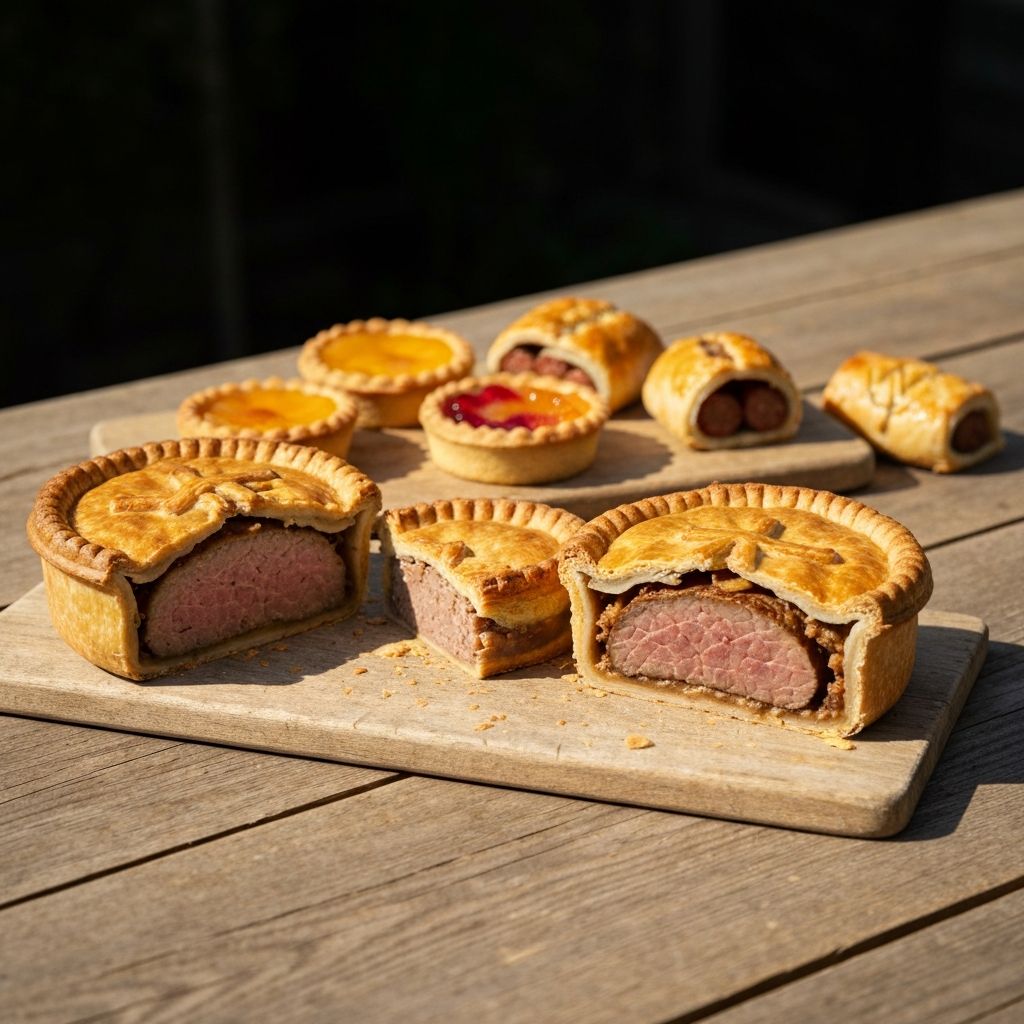
British Pies and Pastry Dishes: Composition Insights
British pies and pastry dishes represent a traditional component of UK culinary practice. Understanding the nutritional composition of various pie types and pastry preparations provides detailed insight into food structure and the impact of pastry components on overall meal composition.
Pie Type Composition Analysis
The following table presents composition data for traditional British pie varieties:
| Pie Type | Per 100g (kcal) | Typical Portion (g) | Portion (kcal) | Protein (g) | Fat (g) | Carbs (g) | Fibre (g) |
|---|---|---|---|---|---|---|---|
| Meat Pie (beef) | 286 | 150 | 429 | 11 | 15 | 27 | 0.9 |
| Steak & Kidney Pie | 295 | 150 | 442 | 13 | 16 | 26 | 0.8 |
| Chicken & Mushroom Pie | 267 | 150 | 400 | 12 | 14 | 28 | 0.5 |
| Sausage Meat Pie | 298 | 150 | 447 | 10 | 17 | 29 | 0.6 |
| Vegetable Pot Pie | 198 | 150 | 297 | 5 | 9 | 25 | 2 |
| Shortcrust Pastry (raw) | 498 | 30 (as top) | 149 | 6 | 32 | 38 | 1.5 |
| Puff Pastry (raw) | 540 | 30 (as top) | 162 | 5 | 40 | 40 | 1 |
Pastry Component Impact on Composition
The type and thickness of pastry crust significantly affects overall meal energy density:
Shortcrust Pastry
Composition: 498 kcal/100g
Standard thickness: 2–3mm when baked
Contribution to pie: 35–50% of total energy in typical meat pie
Puff Pastry
Composition: 540 kcal/100g
Air incorporation: Multiple fat layers create volume
Contribution to pie: 40–55% of total energy despite similar weight to shortcrust
Top Crust Only
Pie with top crust only: 200–250 kcal/100g
Pie with top and bottom crust: 280–320 kcal/100g
Difference: Additional pastry layer adds 80–100 kcal per 150g portion
Filling Variation
Beef filling: 120–150 kcal/100g
Chicken filling: 90–110 kcal/100g
Vegetable filling: 50–70 kcal/100g
Traditional vs Modified Pie Compositions
Contemporary pie preparations may vary substantially from traditional recipes:
- Traditional meat pie (double crust): 286–298 kcal/100g
- Single-crust meat pie variant: 220–240 kcal/100g
- Whole wheat pastry variant: 470–490 kcal/100g (similar energy but higher fibre 2.5–3g per 100g pastry)
- Reduced-fat filling variant: 240–260 kcal/100g for similar pie type
- Hand-raised pie (hot water crust): 260–280 kcal/100g due to different pastry fat ratio
Macronutrient Distribution in Pies
The macronutrient distribution reflects both filling and pastry composition:
| Pie Type | Protein (g/portion) | Fat (g/portion) | Carbs (g/portion) | Fibre (g/portion) |
|---|---|---|---|---|
| Beef meat pie | 16.5 | 22.5 | 40.5 | 1.35 |
| Chicken mushroom | 18 | 21 | 42 | 0.75 |
| Vegetable pie | 7.5 | 13.5 | 37.5 | 3 |
Preparation Method Variations
The cooking method affects final composition of traditional British pies:
- Oven-baked pies: Standard 180–200°C, 25–35 minutes depending on size
- Hot water crust (hand-raised): Traditional method produces denser, shorter crust approximately 240–280 kcal/100g
- Deep-fried pie variants: Found in some regional traditions, adds 40–60 kcal/100g compared to baked versions